How AI catches cavities before they happen
Before a cavity forms, a tooth can begin showing subtle signs of mineral loss. AI can help your dentist find them.
AI-assisted technology can analyse dental images in remarkable detail, picking up subtle patterns and changes that may be difficult to distinguish at a glance. Your dentist can then bring that added information together with their examination, experience and clinical judgement.
Finding these changes early can mean more opportunities to strengthen and protect the tooth before decay progresses, potentially avoiding a filling and preserving more of your natural tooth.
So, what exactly is AI seeing, and how does it help your dentist make sense of those early changes?
Here’s how AI-assisted cavity detection works, and what it could mean for the way we prevent and manage tooth decay.
Finding problems before symptoms arise
Dentists have always relied on a combination of clinical examinations and dental X-rays to assess the health of teeth.
During a check-up, your dentist may look for visible signs of decay, examine the surfaces of your teeth and review X-rays for changes that cannot be seen during a visual examination. These methods remain essential and continue to form the foundation of dental diagnosis.
The challenge is that early tooth decay can be subtle.

Decay often begins with demineralisation, a process where minerals are gradually lost from the enamel. At this stage, the tooth may not have developed a visible hole or cavity, and you may not experience any discomfort.
Small changes can also be difficult to identify, particularly when they occur between teeth or in areas that are not easily visible.
AI-assisted technology is designed to provide an additional layer of support by analysing dental images and highlighting areas that may require closer review.
How AI helps dentists detect potential cavities
Dental AI does not replace your dentist or make treatment decisions on its own.
Instead, it works as an additional diagnostic tool.
AI software can analyse digital dental X-rays and look for patterns that may be associated with tooth decay. These systems are trained using large collections of dental images, allowing them to recognise visual features that may indicate changes in tooth structure.
When the software identifies an area that may need attention, it can highlight it directly on the image.
A second set of digital eyes
Think of AI as an additional set of eyes reviewing the X-ray.
It can help draw attention to subtle areas that a dentist may want to examine more closely. The dentist then considers those findings alongside the original image, clinical examination, symptoms and the patient’s overall oral health.
A highlighted area does not automatically mean that you have a cavity.
The final diagnosis always requires professional clinical judgement.
This is an important distinction. AI can identify patterns and potential concerns, while your dentist determines what those findings mean and whether any treatment or monitoring is required.
Why early detection can make a big difference
Tooth decay is a progressive process.
Plaque bacteria use sugars from food and drinks to produce acids. Repeated acid exposure can gradually weaken the enamel by drawing minerals out of the tooth.
Fortunately, the earliest stages of this process are not always permanent.
When demineralisation is identified before the enamel has suffered significant structural damage, it may be possible to slow or stop the process through preventive care.
Depending on the individual situation, your dentist may recommend:
- Professional fluoride treatments
- Fluoride toothpaste or other dentist-recommended products
- Improved brushing and cleaning between the teeth
- Reducing frequent exposure to sugary foods and drinks
- Monitoring the affected area over time
- Other preventive approaches suited to your oral health needs
Not every early lesion can be reversed, and some cavities will still require restorative treatment.
The advantage of early detection is that it gives your dentist more options before the damage becomes more extensive.
Less drilling, more natural tooth
Modern dentistry places strong emphasis on preserving healthy tooth structure.
Once decay has progressed to the point where a physical cavity has formed, a filling may be necessary to restore and protect the tooth. When changes are identified earlier, there may be an opportunity to manage the problem before drilling becomes necessary.
This represents an important shift towards more conservative dental care.
Rather than waiting until a tooth becomes painful or visibly damaged, dentists can focus on identifying risk factors and early changes before significant tooth structure is lost.

Protecting the natural tooth is always preferable when possible.
A small cavity can become a larger one if decay continues. Over time, more extensive damage may require increasingly complex treatment, such as a large restoration, crown or root canal treatment.
Preventing that progression is one of the greatest benefits of regular dental care.
Making dental X-Rays easier to understand
Dental X-rays contain a wealth of information that dentists are trained to interpret, but to an untrained eye, they can look like little more than shades of grey.
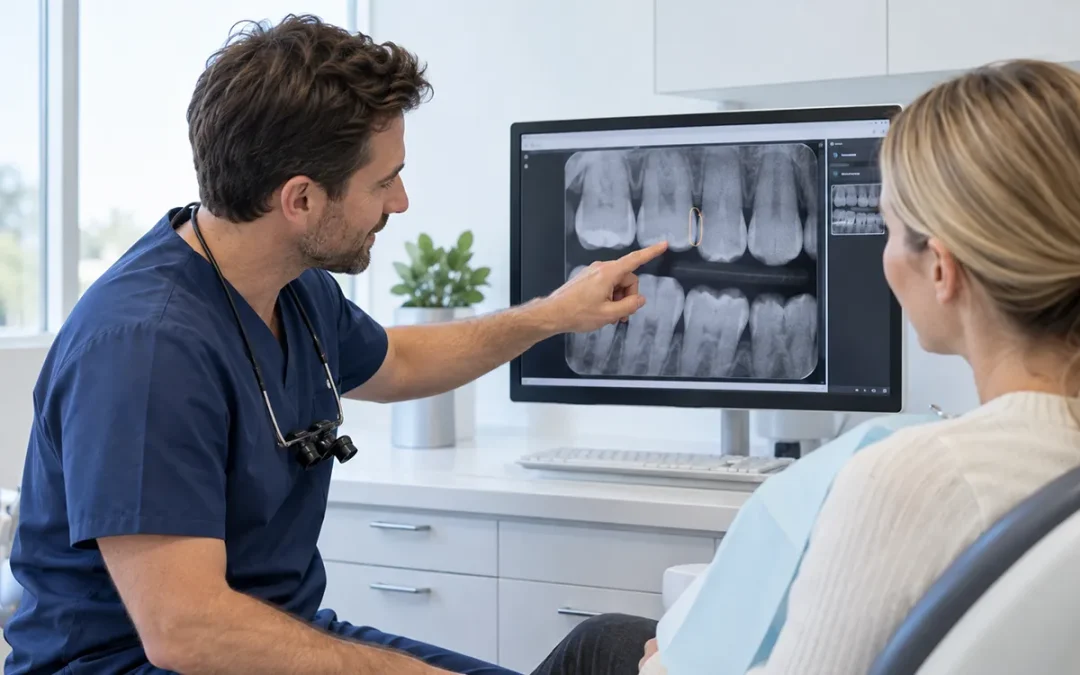
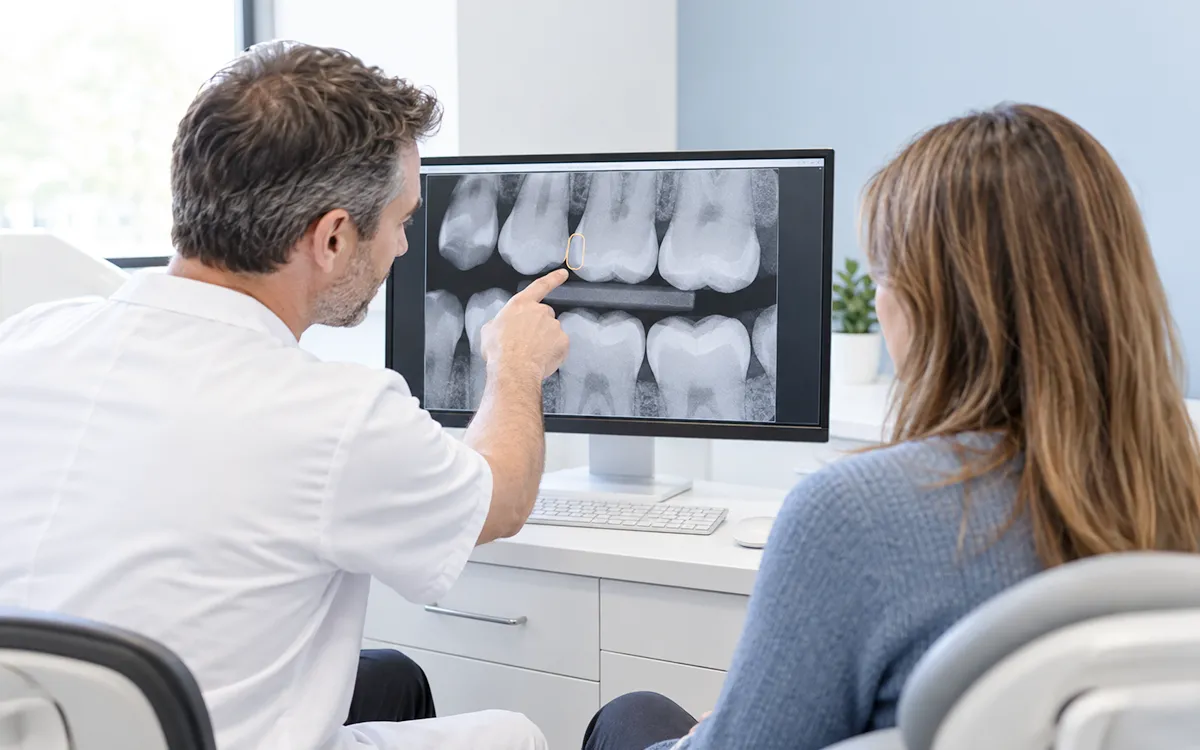
AI can support your dentist’s assessment by analysing the image and visually highlighting areas that may warrant attention. These markings can also give your dentist a useful way to show you exactly what they are assessing.
Rather than simply being told that an area needs monitoring or treatment, you can see where the concern is and have your dentist talk you through what it means.
It’s a simple added benefit of the technology: supporting your dentist’s assessment while helping you better understand your own oral health.
AI is supporting dentists, not replacing them
Artificial intelligence is becoming increasingly sophisticated, but dental care still depends on professional expertise.
An AI system can analyse an image for patterns. It cannot fully understand your individual circumstances.
Your dentist considers much more than what appears on an X-ray. They may also assess:
- Your symptoms and concerns
- Your dental and medical history
- The condition of your teeth and gums
- Your risk of future dental problems
- Changes in your oral health over time
This broader clinical picture is essential when making decisions about treatment.
AI provides additional information. Your dentist provides the knowledge and judgement needed to interpret that information in the context of your individual oral health.
The most valuable role for AI is as a tool that supports more informed, consistent and preventive dental care.
What this could mean for your next dental visit
AI-assisted diagnostics are part of a broader movement towards earlier and more preventive dentistry.
During your regular dental check-up, your dentist may use a range of technologies to examine your teeth and identify changes that are not immediately obvious.
When AI is used alongside digital imaging, it can provide additional support in reviewing dental X-rays and highlighting potential areas for closer assessment.
For patients, the potential benefits include:
- Earlier identification of potential problems
- More opportunities for preventive care
- Clearer explanations using visual images
- Greater ability to monitor changes over time
- A more conservative approach when early intervention is possible
AI cannot prevent cavities on its own. It also cannot replace regular dental visits or good oral hygiene.
Its value lies in helping dentists identify possible concerns earlier, when there may be more options for protecting your natural teeth.

Prevention still starts with excellent dental habits
Technology can help dentists detect changes, but the everyday choices you make still play a major role in preventing tooth decay.
Brushing twice a day with fluoride toothpaste helps protect your enamel. Cleaning between your teeth removes plaque from areas your toothbrush cannot easily reach. Limiting frequent sugary snacks and drinks can also reduce the repeated acid attacks that contribute to tooth decay.
Regular dental check-ups complete the picture.
Many dental problems develop without causing pain, which is why waiting until something hurts is not always the best approach. Routine visits allow your dentist to monitor your oral health and identify changes before they become more serious.
Protecting your smile before problems become painful
The best time to deal with tooth decay is often before you know it’s there.
AI-assisted technology gives dentists more information to work with, helping them assess subtle changes and make informed decisions about when to monitor, prevent or treat a developing problem. It is not replacing the dentist’s expertise. It is helping strengthen a preventive approach focused on protecting healthy teeth and addressing concerns as early as possible.
Combined with regular dental check-ups and diligent oral hygiene at home, early detection can help reduce the risk of small problems becoming more complex.
The future of dental care isn’t waiting for problems to hurt. It’s finding them sooner. At your next check-up, ask your dentist about the technology they use to detect early changes and how preventive care can help protect your natural teeth.