
Case Study
Bridge Restoration with Alignment Correction
Replacing a missing tooth and refining upper front teeth

Patient overview
Ms. B came in with a missing front tooth on the upper right side (central incisor, tooth 11). Our main goal was to replace the missing tooth so it looks natural and works well, while also straightening the front teeth to make her bite more balanced.
Clinical assessment
A comprehensive clinical and radiographic evaluation was conducted to assess Ms. B’s oral condition. The findings indicated a Class II skeletal tendency with upper anterior protrusion, affecting the alignment and positioning of the anterior maxillary teeth.
While a dental implant was initially considered for the replacement of tooth 11, the skeletal pattern and anterior inclination suggested that a fixed bridge would provide a more suitable restorative outcome. This approach allowed functional rehabilitation while refining anterior alignment and achieving a natural, harmonious result.
Treatment planning
A fixed bridge restoration extending from tooth 12 to tooth 21 with a separate 22 single crown was planned to replace the missing upper right central incisor (tooth 11). This design enabled restoration of the edentulous site while refining the upper anterior alignment for improved arch symmetry and occlusal harmony.
Key treatment goals:
- Replace the missing tooth with a stable, functional, and aesthetic prosthesis
- Establish proper contact points and occlusal balance
- Harmonise the anterior arch form
Following a comprehensive review and discussion of diagnostic findings, the fixed bridge was determined to be the most suitable restorative approach for this case.
Treatment procedure
High-resolution intraoral scans and radiographs were obtained to create detailed digital records. These were used to capture the initial teeth alignment, design the bridge framework and establish precise contours for the anterior segment, ensuring optimal fit within the existing occlusal scheme.
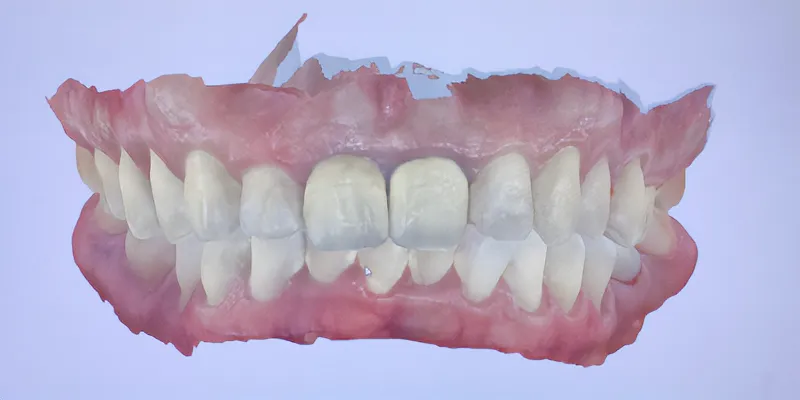
Teeth 12 and 21 were conservatively prepared to serve as abutments for the bridge, 22 as a single crown. The preparation design prioritised enamel preservation and appropriate retention form. Shade was carefully selected to achieve seamless integration with adjacent teeth.
A digital model of the prepared teeth was generated, and the bridge was fabricated using high-strength ceramic material chosen for its durability, precision, and natural translucency. The restoration was further characterised to replicate the anatomy and surface texture of the surrounding dentition.
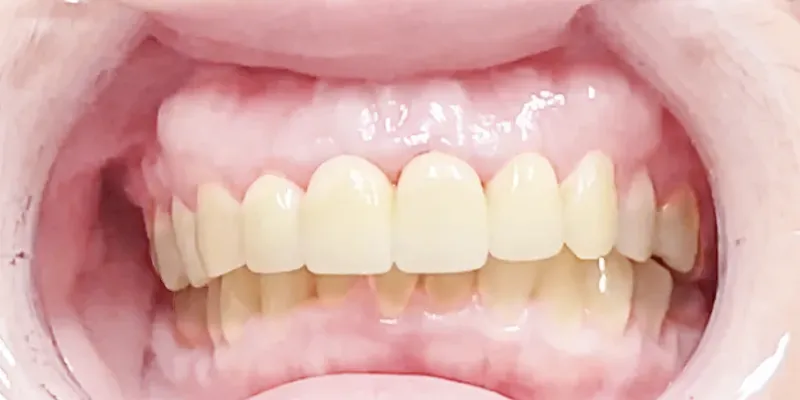
The bridge was evaluated intraorally to assess marginal adaptation, interproximal contacts, and occlusal balance. Minor adjustments were made to ensure accurate seating, alignment, and harmonious integration within the upper arch.
After confirming the fit, occlusion, and aesthetics, the final bridge was bonded using resin cement under isolation. Post-cementation checks confirmed correct seating, smooth margins, and proper occlusal contact for long-term maintenance.
Clinical outcome
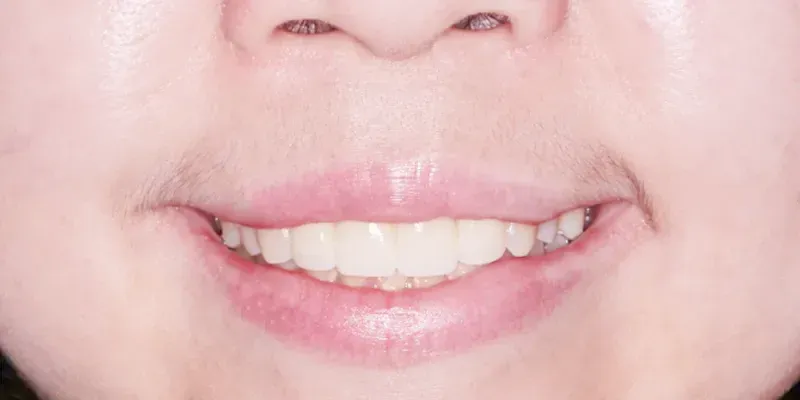
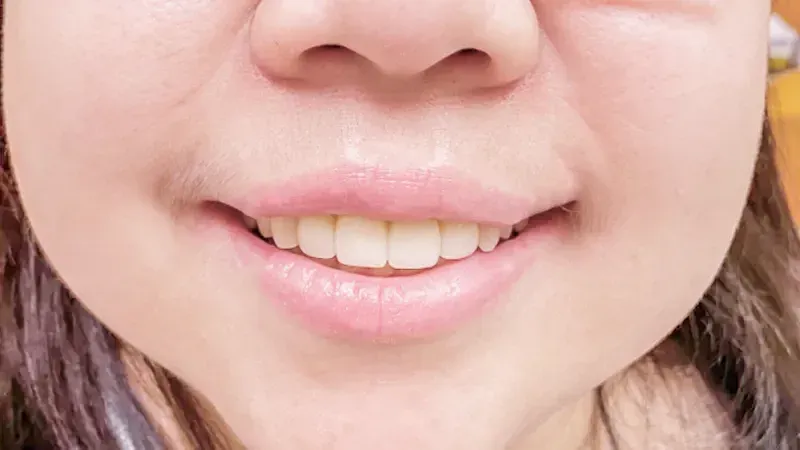
The completed bridge restoration effectively replaced the missing tooth and re-established functional continuity across the anterior maxillary region. The final restoration demonstrated stable occlusion, improved anterior alignment, and precise shade integration with the adjacent dentition.
Post-treatment assessment confirmed healthy soft tissue response, accurate marginal adaptation, and satisfactory contour around both abutment teeth and the pontic area.
Maintenance and review
The patient was provided with instructions on proper oral hygiene practices around the bridge and abutment teeth, including the use of floss threaders and interdental brushes for effective cleaning. Regular recall visits were scheduled to assess soft tissue health, evaluate bridge stability, and monitor occlusal balance over time.
Restoring aesthetics, function, and alignment
This case shows a complete treatment plan for replacing a missing front tooth in a patient whose jaw and front teeth were slightly forward (Class II skeletal tendency with upper anterior protrusion). We used a fixed bridge (spanning teeth 12 to 21) and a single crown on 22 to restore function, improve the alignment of the front teeth (upper anterior alignment), and ensure a stable fit in the upper jaw (integration within the maxillary arch).